
Engage
 3 min read
European Commission digital ecosystem consultations
So far this year, we have responded to two European Commission consultations urging a digital ecosystem focus.
AI Sandbox regulation: Scaling governance through an ecosystem approach
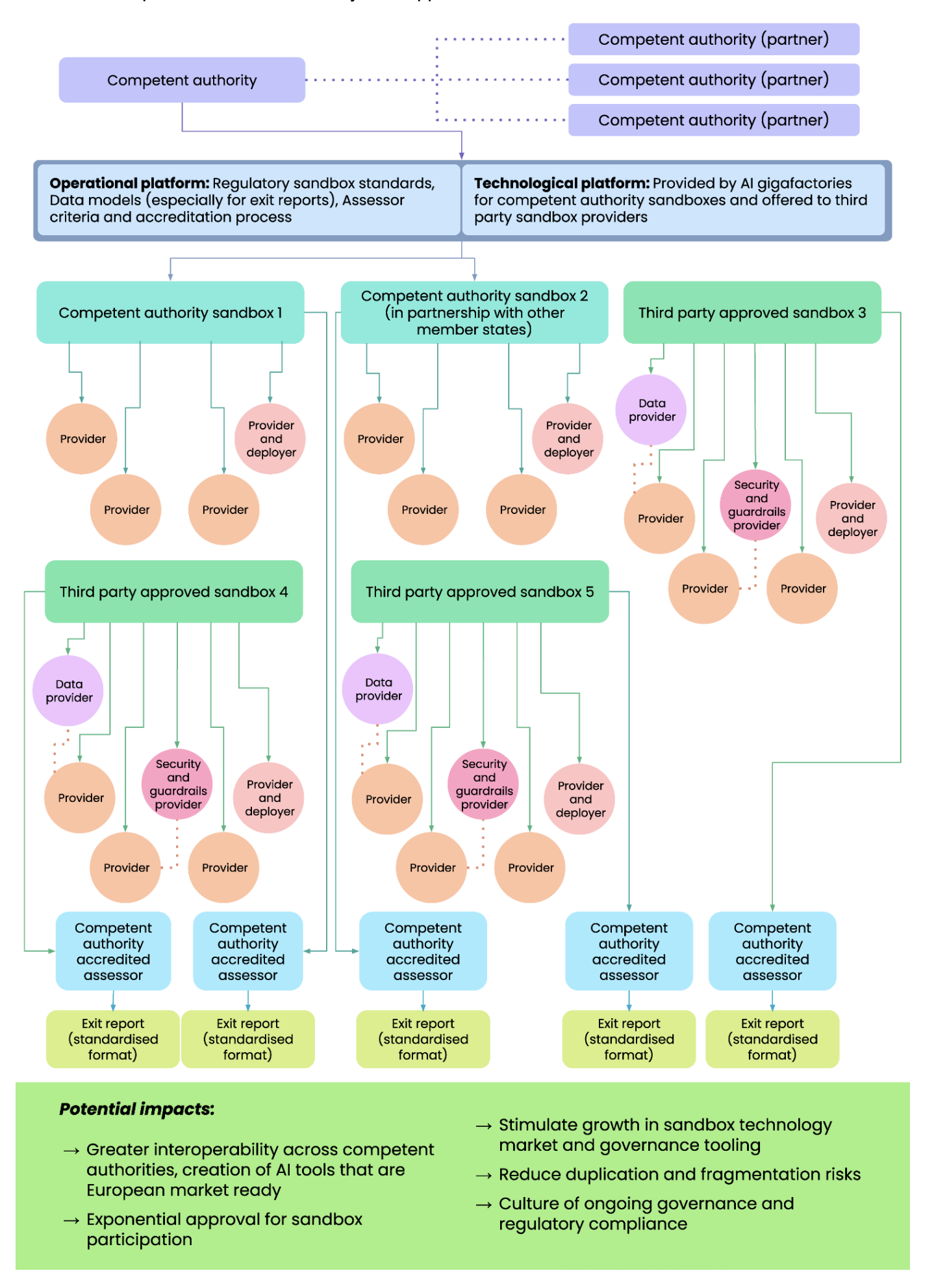
The AI Sandbox Regulation aims to establish sandboxes attached to AI regulators ("competent authorities") in each Member State. In the past, these kinds of approaches have been fairly challenge/hackathon-esque in supporting some innovators to think through implications, but we also hear from industry and European Commission stakeholders that there is some sort of expectation that the regulatory sandboxes will help clarify and oversee the regulatory challenges that new AI tools may face. If that is the case, we recommend a more ecosystem-like approach, drawing on standards and certification models like we see in the emerging carbon markets for example.
In our response, we urge the competent authorities to first define the characteristics of a regulatory sandbox so that external parties could apply to become one. Then we urge a common data model for assessing sandboxes so that any certified regulatory sandbox can provide the same data outputs demonstrating compliance alignment.
This would ensure that regulatory sandboxes could be provided at scale in any Member State and merge into existing governance processes so it was seen as less of a one-off activity for a handful of AI projects, and instead be part of the AI product development lifecycle for all.
Read our response here.
Open Digital Ecosystems: More than open source, but ok let's talk about open source
The Open Digital Ecosystems call for evidence consultation was somewhat of a misnomer. The consultation focused on open source technologies, but we would be hesitant to call this an ecosystem. In our worldview, open source technologies are either a peer network of providers with similar business models and goals, or a technology sub-sector based on their approach to market delivery.
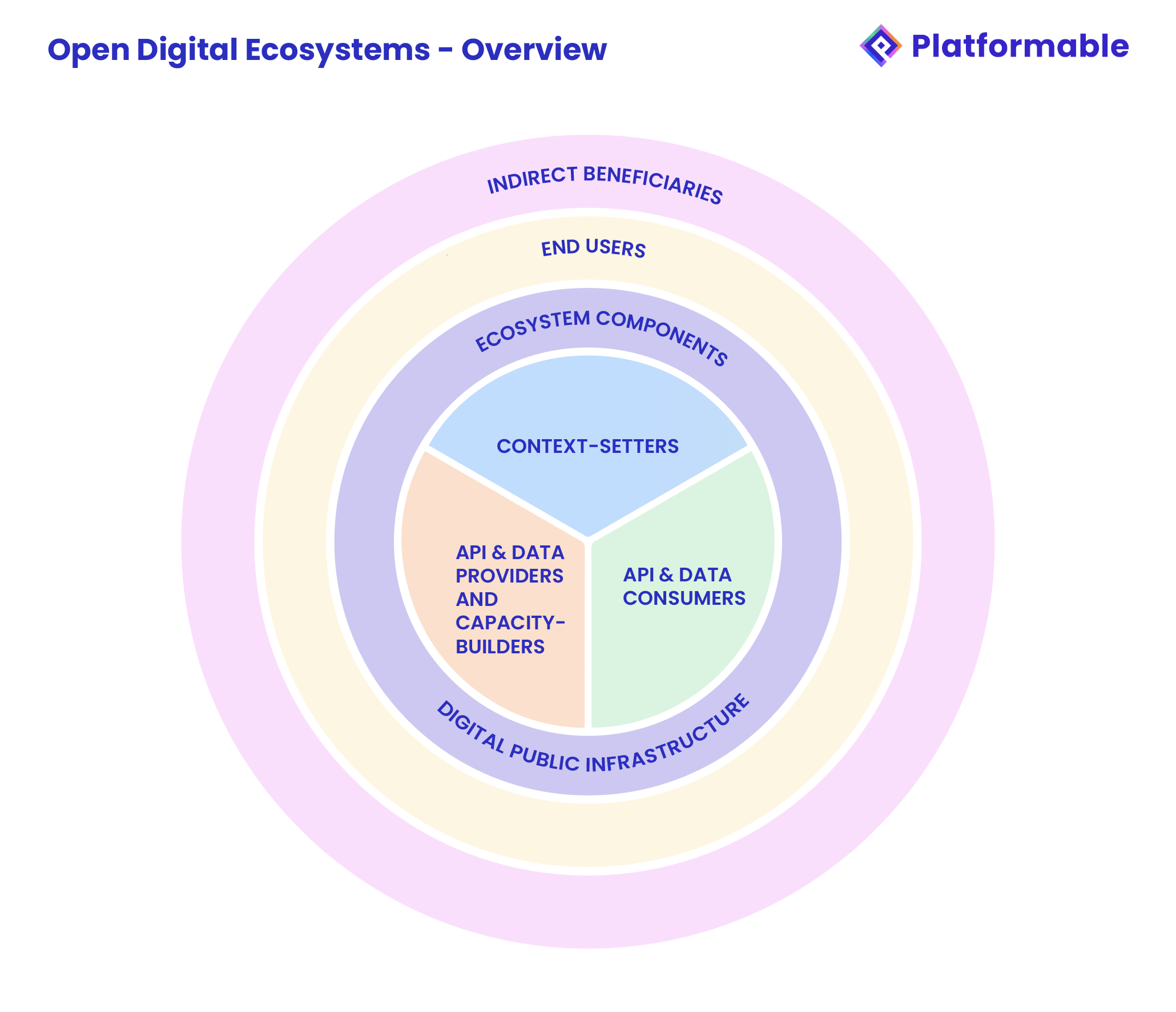
A digital ecosystem, in our definition , enables a range of relationships (collaborate, coordinate, co-create, complement and compete) between stakeholders (government, private sector, media, research, non-profit) using common tools and infrastructure (open standards, open data, open APIs, open source tools, and digital public infrastructure).
From this lens, open source technologies play a crucial part in supporting digital sovereignty, scaling market entry, and accelerating product and service development in any digiotal ecosystem whether that is based on industry sector (finance, health, supply chain traceability, agrifood or so on), at a country level (Spain, France), at a subsector level (payments, medical devices), or a a country-and-subsector level (payments in Belgium, medical devices in Finland).
In any case, the consultation document drops the word 'ecosystem' after using it as the title and instead focuses on challenges facing open source technologies, so our response focused on that, although, of course, we explain why ecosystem-based strategies are the way to support open source.
Also, due to time pressures, I took less of a formal tone in our submission, and instead, wrote more casually as an individual. I am grateful for all of the open source technologists that shared some time with me to help clarify my thinking and I hope you feel your views are represented in this response.
Read our response here.

Mark Boyd
DIRECTORmark@platformable.com

 based in Barcelona


 GO TO TOP